
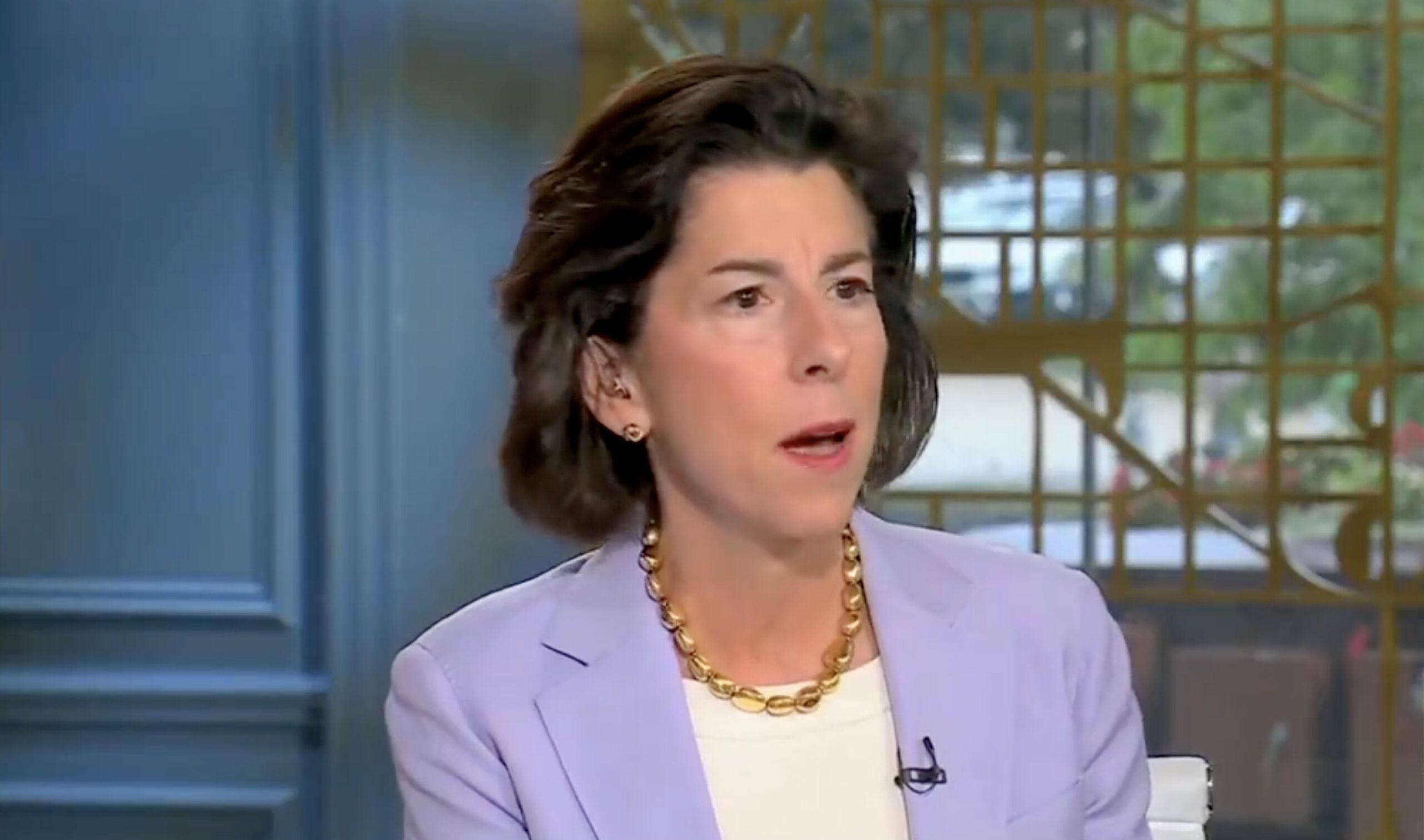

On a recent episode of MSNBC, Commerce Secretary Gina Raimondo made headlines when she urged the audience to “extinguish” former President Donald Trump. This shocking statement came just ten days after a failed assassination attempt on Trump during a golf outing in West Palm Beach, Florida, raising serious concerns about the safety and rhetoric surrounding political figures today.
During her appearance, Raimondo expressed her disdain for Trump, stating, “He says he’s the opposite. It’s just another lie. Like, how did we get here? Let’s extinguish him for good. We have an answer. We have a remarkably talented candidate who is sincere, who’s pragmatic, who’s open. Let’s just get it done.” Her comments sparked outrage and prompted many to question the implications of such inflammatory language coming from a high-ranking government official.
The backdrop to her remarks is troubling. On September 15th, Ryan Routh was apprehended after attempting to kill Trump at a golf course. Authorities revealed that Routh had been stalking the former president for two months leading up to the incident. The FBI’s pre-trial report indicates he had meticulously planned this attack, which raises questions about how he obtained information regarding Trump’s whereabouts on that day.
This incident marks the second assassination attempt against Trump within a short span of time. Earlier this summer, on July 13, another individual shot Trump during a rally in Butler, Pennsylvania. That attack left one supporter, Corey Camperatore, dead and injured two others. Reports indicate that Secret Service agents had inadvertently left an area unguarded, allowing the assailant an opportunity to take aim at the former president.
Despite these alarming events, Raimondo’s call for violence against Trump has not gone unnoticed. Critics argue that such rhetoric only serves to fuel division and incite further acts of aggression in an already polarized political landscape. The consequences of public officials using language that suggests harm against their opponents can be severe and far-reaching.
In light of these incidents, it’s crucial for all individuals—politicians and citizens alike—to reflect on the power of their words and the impact they can have on society. While political disagreements are natural in a democracy, advocating for violence undermines the very principles upon which our nation was built.
The question now stands: how do we move forward in a climate where political leaders openly express wishes for harm against others? What does this mean for our discourse as a nation? The urgency for respectful dialogue has never been more apparent.
As this story continues to unfold, we invite you to share your thoughts in the comment section below. Your insights are valuable as we navigate these complex issues together.