
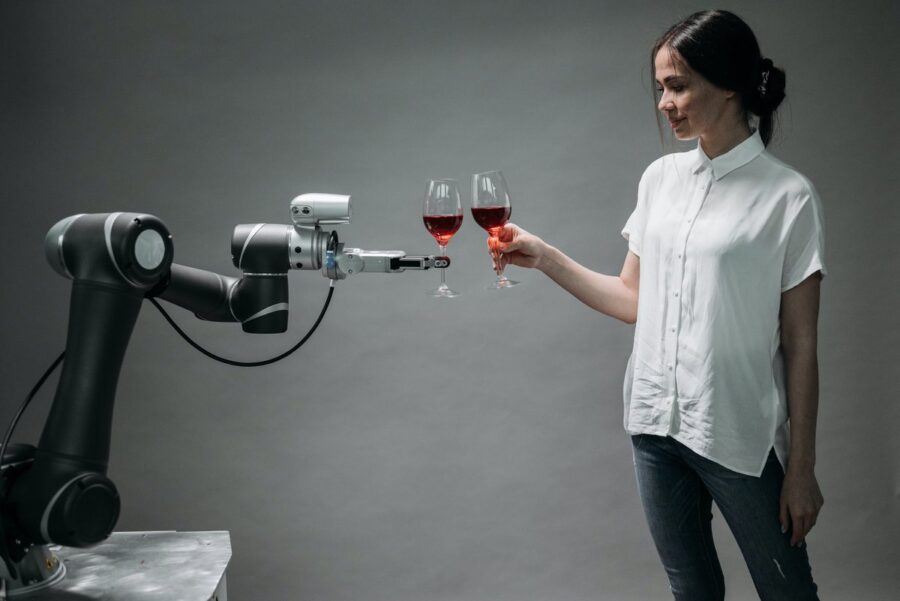

Chipotle, the beloved fast-food chain, is now using robots in its California locations to counterbalance the costs linked with the state’s new $20 minimum wage. This move mirrors a growing trend in the fast-food industry where businesses are turning to automation to manage rising labor expenses due to government mandates. https://twitter.com/BrunoPresents/status/1835788053170008449?ref_src=twsrc%5Etfw
In response to California’s significant minimum wage increase, Chipotle has rolled out two robots: the “Autocato” for preparing avocados for guacamole and the “Digital Makeline” for portioning salads and bowls based on mobile app orders. The “Autocato” can peel, pit, and cut an avocado in just 26 seconds, making guacamole preparation much faster than when done by human hands. Meanwhile, the “Digital Makeline” ensures consistent portioning and reduces dependence on manual labor by streamlining food assembly.
This shift to automation underscores the economic hurdles businesses face with wage mandates. California’s $20 minimum wage is among the highest in the U.S., putting pressure on businesses to adjust their cost structures to stay profitable. Chipotle’s investment in robotics clearly illustrates one of the unintended consequences of such legislation.
While supporters of higher minimum wages argue that they improve living standards for low-income workers, the reality is more nuanced. Increased labor costs often push businesses to find cost-cutting measures, such as reducing hours, raising prices, or replacing human workers with machines. This raises important questions about how wage policies impact job availability, particularly for entry-level and unskilled workers.
Chipotle’s move isn’t an isolated case but part of a broader trend across various industries. Fast-food chains and retailers are increasingly investing in technology to sidestep rising labor costs. Self-service kiosks, automated checkouts, and food-preparation robots are becoming more common, reducing the need for human employees in routine tasks. This technological shift could reshape the labor market, especially for low-skill positions most vulnerable to automation.
By deploying these robots, Chipotle demonstrates what businesses must do to compete in today’s market. Some see this as a positive development that boosts efficiency, while others worry it displaces jobs traditionally filled by entry-level workers.
From a conservative perspective, this reliance on automation is an inevitable market response to government wage interventions. When regulations artificially inflate wages beyond what a business can sustain, companies naturally seek alternatives. While automation offers operational advantages, it also highlights a broader issue: government-mandated wages can disrupt the labor market by inadvertently reducing low-wage job availability.
The introduction of robots at Chipotle might signal a larger transformation within the service industry. As labor costs rise, automation could become standard practice, potentially reducing entry-level job opportunities. This development challenges policymakers advocating for minimum wage hikes since job losses due to automation contradict their goal of improving worker welfare.
Chipotle’s strategy shows its commitment to staying profitable while adapting to California’s regulatory environment. However, it also raises questions about the future of low-skill employment as automation becomes more accessible and cost-effective. As more companies turn to technology to offset labor costs, fewer opportunities may exist in industries that historically provided a first step into the job market.
What do you think about Chipotle’s move towards automation? Share your thoughts in the comment section below!