
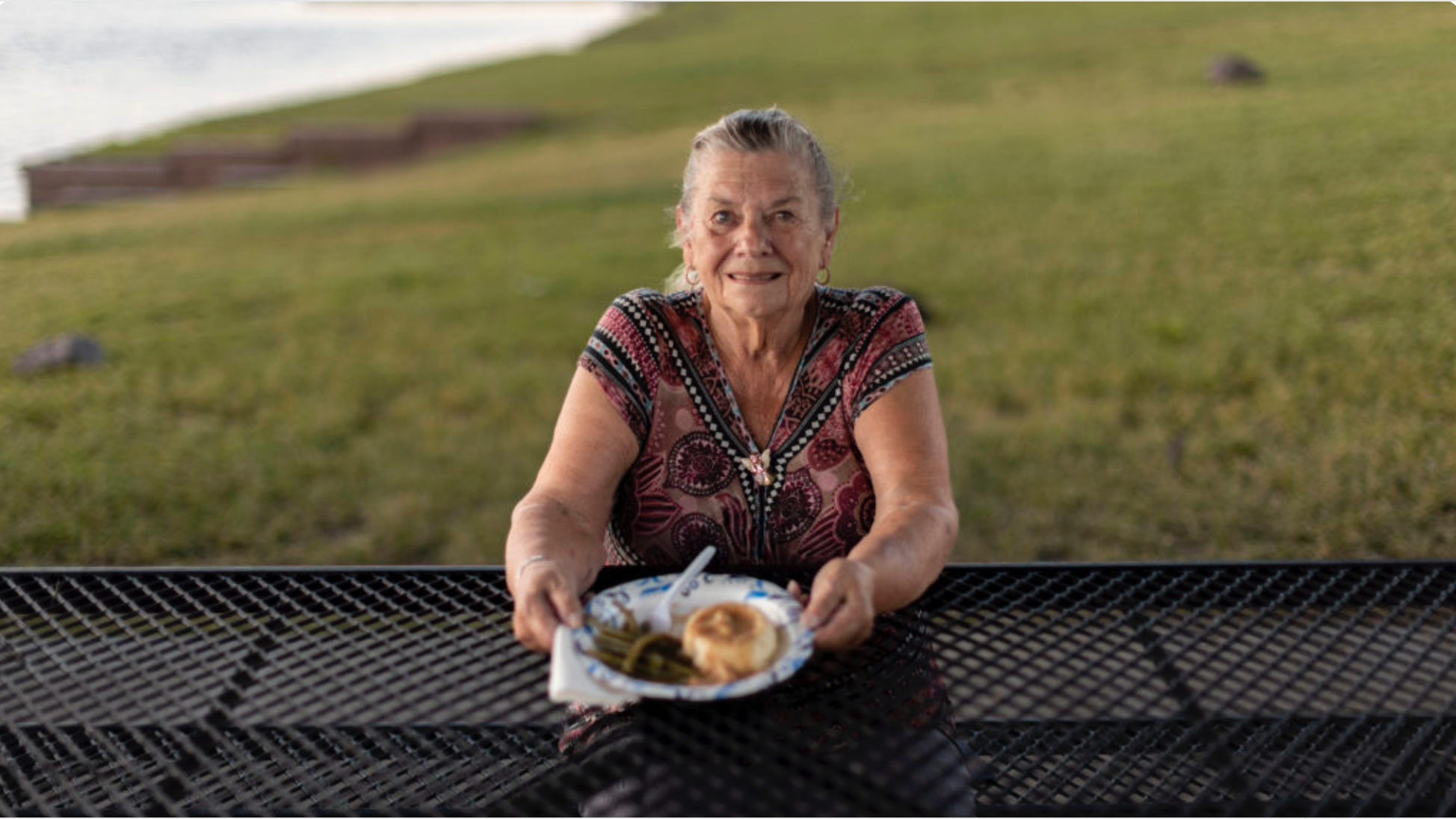

In a shocking turn of events, an Arizona grandmother named Norma Thornton found herself arrested for doing something many would consider a noble act: feeding the homeless. At 78 years old, Thornton was taken into custody in 2022 for violating a local law in Bullhead City that criminalizes sharing food in public parks for charitable purposes. This incident has sparked outrage and raised questions about the legality and morality of such regulations.
Thornton expressed disbelief at her arrest, initially thinking it was a prank. “Still, I thought it was a kind of joke, someone playing a prank – until I was put in the back of the police car,” she recounted in an interview with Fox 5 Vegas. Her philosophy has always been simple; when you have plenty, you should share. This belief motivated her to help those less fortunate, especially after she retired and moved to Bullhead City.
In response to this troubling situation, the Institute for Justice (IJ) stepped in to advocate on Thornton’s behalf. They filed a federal lawsuit against Bullhead City in October 2022, aiming to challenge the constitutionality of this law. Recently, however, a U.S. district court ruled that the city’s ordinance is constitutional. This decision has only intensified the fight for Thornton and others who believe that helping those in need should not be met with legal repercussions.
Paul Avelar, a senior attorney at IJ, emphasized the importance of charitable activities as a fundamental aspect of American life. He stated, “Americans have a constitutional right to engage in charitable activities and cities can’t pass laws that outlaw doing so.” The court’s ruling failed to acknowledge charity’s deep roots in American history, according to Avelar. The IJ plans to appeal this decision, seeking justice for Thornton and challenging the notion that serving one’s community is not a fundamental right.
The law at the center of this controversy requires individuals to obtain permits before sharing prepared food in public parks under the guise of “non-social gatherings” meant for charitable purposes. However, critics argue that this requirement essentially acts as a ban rather than a legitimate permit process. Obtaining such permits can be costly and burdensome. Even with permission, individuals are limited to sharing food only once per month. In contrast, Thornton could host a pizza party for fifty friends without any restrictions—yet offering food to those in need puts her at risk of hefty fines or jail time.
Each violation of this law can result in severe penalties: fines up to $1,431, potential jail time of 120 days, and two years of probation. Such consequences seem disproportionate for someone trying to help their community.
IJ Attorney Suranjan Sen commented on the situation by stating, “Homelessness is a multifaceted issue, but criminalizing efforts to help is absolutely the wrong solution.” He stressed that instead of punishing individuals like Thornton who are trying to make a difference, government authorities should be supporting these charitable efforts.
Norma Thornton remains undeterred despite the recent court ruling. She shared her heartbreak over being told she cannot feed the hungry people she cares about. “Being told that I cannot feed the hungry is absolutely heartbreaking to me,” she said resolutely. “All I want to do is help people in my community so they can survive and get back on their feet.” Her determination serves as an inspiration for many who believe in the power of community support.
As this legal battle unfolds, it raises larger questions about how society views charity and whether laws should impede individuals from helping others. The implications of Bullhead City’s law extend beyond just one grandmother; they touch on broader themes of compassion and civic duty.
This case has garnered attention across various media platforms as people rally behind Thornton and her cause. Many are left wondering if laws like these truly reflect our values as a nation or if they create unnecessary barriers for those wishing to lend a helping hand.
If you’re interested in sharing your thoughts on this issue or have experiences related to charitable work being hindered by local laws, please leave your comments below!