
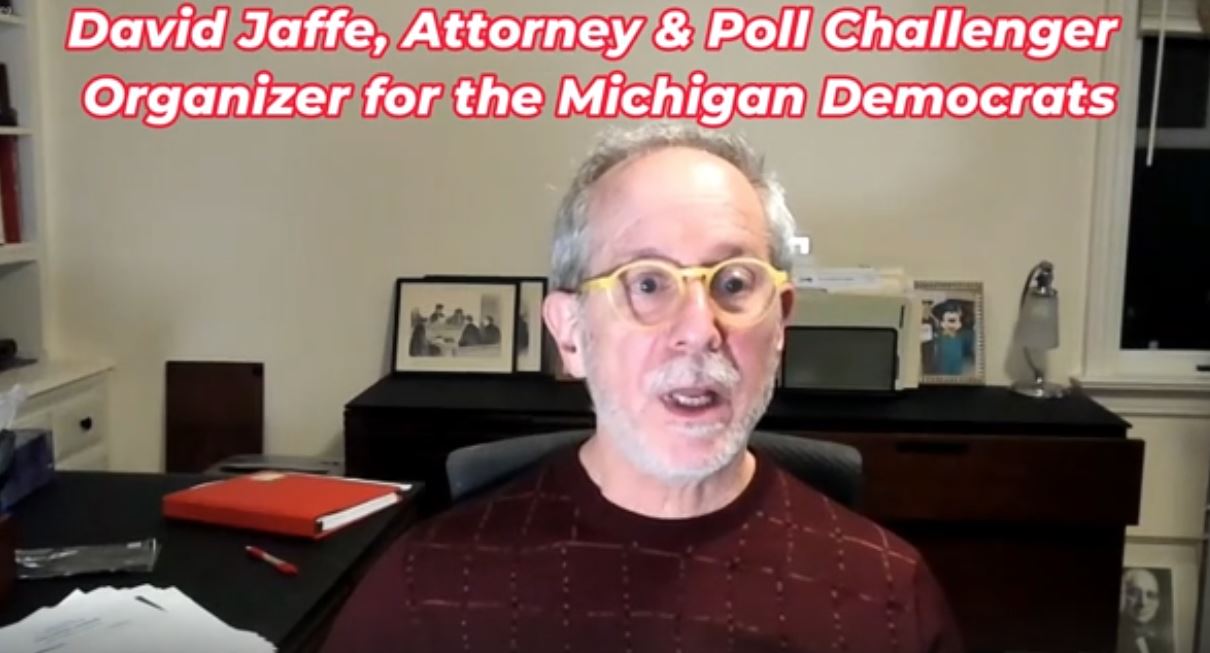

This week in Detroit, the Democrat Party held three training sessions for their poll challengers, aiming to prepare them for the upcoming election. These gatherings were led by David Jaffe, a prominent leftist activist known for his involvement in local politics. Shane Trejo, a journalist with Big League Politics and an advocate for election integrity, attended one of these online sessions and recorded it. His insights shed light on what appears to be a coordinated effort by Democrats to undermine the integrity of the electoral process.
Poll challengers play a crucial role during elections. According to VoteBeat Michigan, they are different from poll workers and watchers; they have specific powers under Michigan law that allow them to question a voter’s eligibility or challenge how election officials conduct their duties. Their purpose is straightforward: ensure that only legal votes are counted and that election workers adhere to the rules.
However, recent changes made by the Democrat-controlled legislature have raised concerns among many about these challengers’ effectiveness. Following allegations of misconduct during the 2020 election—where GOP challengers reported being locked out of counting rooms—new rules were enacted. These regulations now make it easier for poll challengers to be removed if they make repeated challenges deemed legally unfounded. This has led some to believe that Democrats are trying to criminalize any dissent against election workers.
During the training session led by Jaffe, he made disparaging remarks about Republican ballot challengers, framing them as adversaries rather than participants in a democratic process. The video captured by Trejo reveals troubling strategies aimed at discrediting those who seek transparency in voting practices.
The implications of this training are significant. For instance, Jaffe indicated plans to intimidate election integrity activists through doxxing—making personal information public as a means of harassment—to discourage their participation in monitoring elections. He specifically mentioned targeting groups like the Election Integrity Fund as part of their opposition strategy.
Moreover, there were alarming claims regarding access to essential tools needed for verifying ballots. Jaffe stated that electronic poll books—which serve as crucial auditing tools against paper ballots—would be kept hidden from both challengers and activists seeking accountability. In past elections, discrepancies such as voters with birthdates from the 1800s raised red flags about potential fraud; without access to these records, it becomes nearly impossible for anyone outside the system to verify ballot legitimacy.
Jaffe also spoke about employing technology and communication strategies among Democrat poll challengers while minimizing any paper trail that could document their actions or decisions during voting processes. He boasted about having good relationships with security personnel at polling places and encouraged his team members to identify themselves as Democratic challengers upon arrival—a tactic intended to foster familiarity and ease interactions with officials.
The training further outlined how Democrats plan on using state laws strategically against those advocating for election integrity while openly dismissing concerns raised by Republicans as mere attempts at creating chaos within Detroit’s voting procedures. Jaffe even went so far as to label documentation efforts by integrity activists as “fraud fraud,” suggesting that merely raising questions about ballot validity was an act of wrongdoing itself.
It became clear throughout this session that Democrats were not focused on ensuring fair elections but rather on pushing through every ballot—regardless of its authenticity—and silencing anyone who dared challenge this approach. Jaffe’s comments suggested an environment where scrutiny would not just be discouraged but actively obstructed.
In addition, there was talk about limiting information flow from election officials concerning processes and decisions made during counting—a move designed deliberately to keep Republican observers uninformed and powerless against potentially fraudulent activities taking place behind closed doors.
As highlighted by Trejo’s analysis after attending this training session, it’s evident that Democrats are committed not only to protecting their interests but also actively working against those who seek transparency within electoral systems. This level of coordination raises serious questions about how elections will be conducted moving forward in Detroit—and perhaps beyond—as we head toward another pivotal electoral cycle.
For anyone interested in witnessing these tactics firsthand, Trejo has shared recordings from these sessions which provide insight into this troubling landscape surrounding voter challenges in Michigan’s elections today.
What do you think? Share your thoughts in the comment section below!