
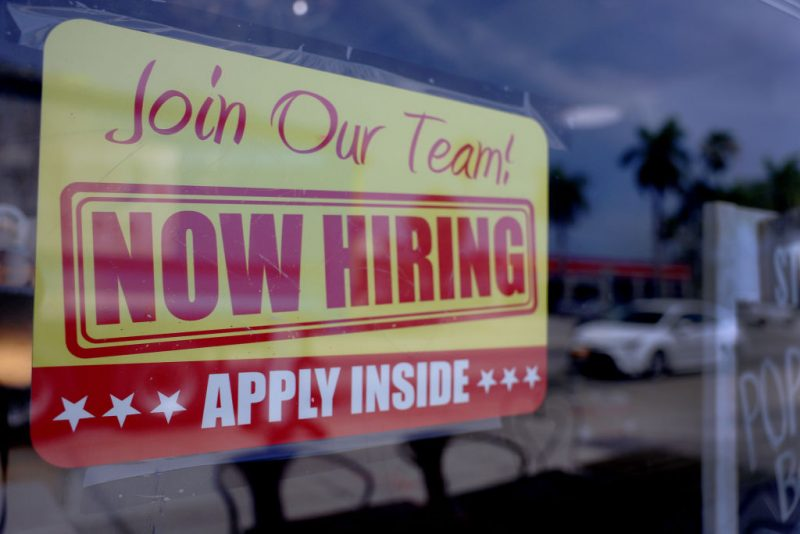

The recent jobs report revealed a disappointing slowdown in U.S. job creation. In April, employers added only 175,000 new roles to their payrolls, a significant decrease from the average of 276,000 new jobs created each month earlier this year. This fell far short of analysts’ prediction of 240,000 new roles, sparking concerns about a potential economic slowdown and the possibility of an interest rate cut.
In addition to this disappointing job growth figure, the unemployment rate also unexpectedly rose to 3.9%, defying expectations that it would remain steady at 3.8%. Despite these concerning figures, there was some positive news with increased hiring observed across healthcare, social assistance, and transportation industries.
However, the overall jobless rate tied for its highest level since January 2022 at 7.4%. This figure includes discouraged workers and those holding part-time jobs for financial reasons – a percentage that hasn’t been this high since November 2021.
Furthermore, the labor force participation rate remained stagnant at 62.7%. This measures the number of people in the labor force as a percentage of the civilian noninstitutional population.
Federal Reserve Chair Jerome Powell faces an uncertain path forward given these latest economic data points. On April 16th, he stated that “given the strength of the labor market and progress on inflation so far, it’s appropriate to allow restrictive policy further time to work and let the data and the evolving outlook guide us.”
On Tuesday, additional data from the Labor Department revealed that worker compensation and benefits only saw a minor increase of 1.2% in Q1 of this year according to employment cost index (ECI). These latest warning signs cast doubt on whether The Fed will be able to achieve its inflation target of 2% by end-2024.
In an attempt to control inflation which peaked at 9.1% in summer 2022, central bankers have already issued 11 different rate hikes. This strategy aimed to aid the struggling economy has led to borrowing rates reaching a 23-year high, between 5.25% and 5.5%.
The CPI for April is due to be released on May 15th. Given these recent developments, it’s clear that our economy needs strong Republican leadership more than ever to navigate through these challenging times.”