
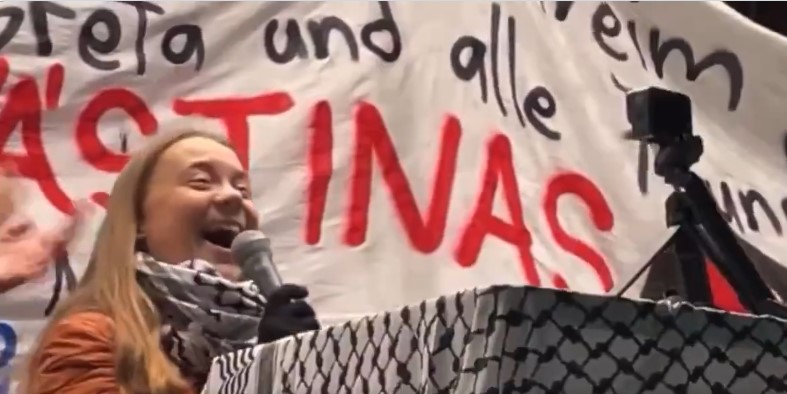

Greta Thunberg, the well-known climate activist, recently stirred up controversy during a pro-Palestinian rally in Mannheim, Germany. She joined hundreds of protesters on Saturday and made headlines for her outspoken remarks. While addressing the crowd, Thunberg expressed her disdain for both Israel and Germany by shouting phrases like “f**k Israel” and “f*ck Germany.” This outburst has drawn significant attention, particularly given her previous accusations against Israel regarding its actions following the brutal attacks by Hamas on October 7, 2023.
Thunberg’s comments were not just casual remarks; they reflect a growing trend among some activists who have been vocal about their views on international conflicts. During the rally organized by Zaytouna in the Rhine-Neckar region, discussions centered around solidarity with Palestine alongside climate issues. This blending of political activism with environmental concerns is becoming more common as various movements intersect.
The backlash to Thunberg’s statements was swift. Critics pointed out that her words undermine the efforts made by countries like Israel in addressing climate challenges. One Twitter user remarked that “Someone should remind Greta that Israel is a global leader in solving climate challenges,” highlighting the contradiction between her environmental advocacy and her harsh criticisms of nations making strides in this area.
As footage circulated online showing Thunberg laughing while making these remarks, it sparked further debate about her role as an activist. Many people are questioning whether she remains focused on climate change or if she has shifted towards supporting controversial political positions instead. The incident has reignited discussions about how public figures navigate complex global issues and whether their platforms can be used to promote divisive rhetoric.
In addition to this event, social media reactions have been plentiful. A tweet from StopAntisemitism highlighted Thunberg’s comments while also emphasizing Israel’s contributions to combating climate change. This response indicates a broader concern among critics regarding how activists like Thunberg may inadvertently alienate potential allies through inflammatory language.
Moreover, this isn’t the first time Thunberg has found herself at the center of controversy involving high-profile figures or events. In past encounters, such as when former President Trump walked past her without acknowledgment at a summit, she became an emblematic figure representing youth activism and its challenges within political spheres.
The rally itself took place in Mannheim’s main market square and was part of a larger movement aiming to unify different causes under one umbrella—climate action and support for Palestine being two focal points here. As various groups come together to advocate for shared goals, it raises questions about how these alliances affect individual messages and strategies moving forward.
As discussions continue around Greta Thunberg’s recent comments and their implications for both climate activism and geopolitical discourse, it’s clear that many are eager to share their thoughts on this evolving narrative. What do you think about Thunberg’s statements? Join the conversation in the comment section below!