
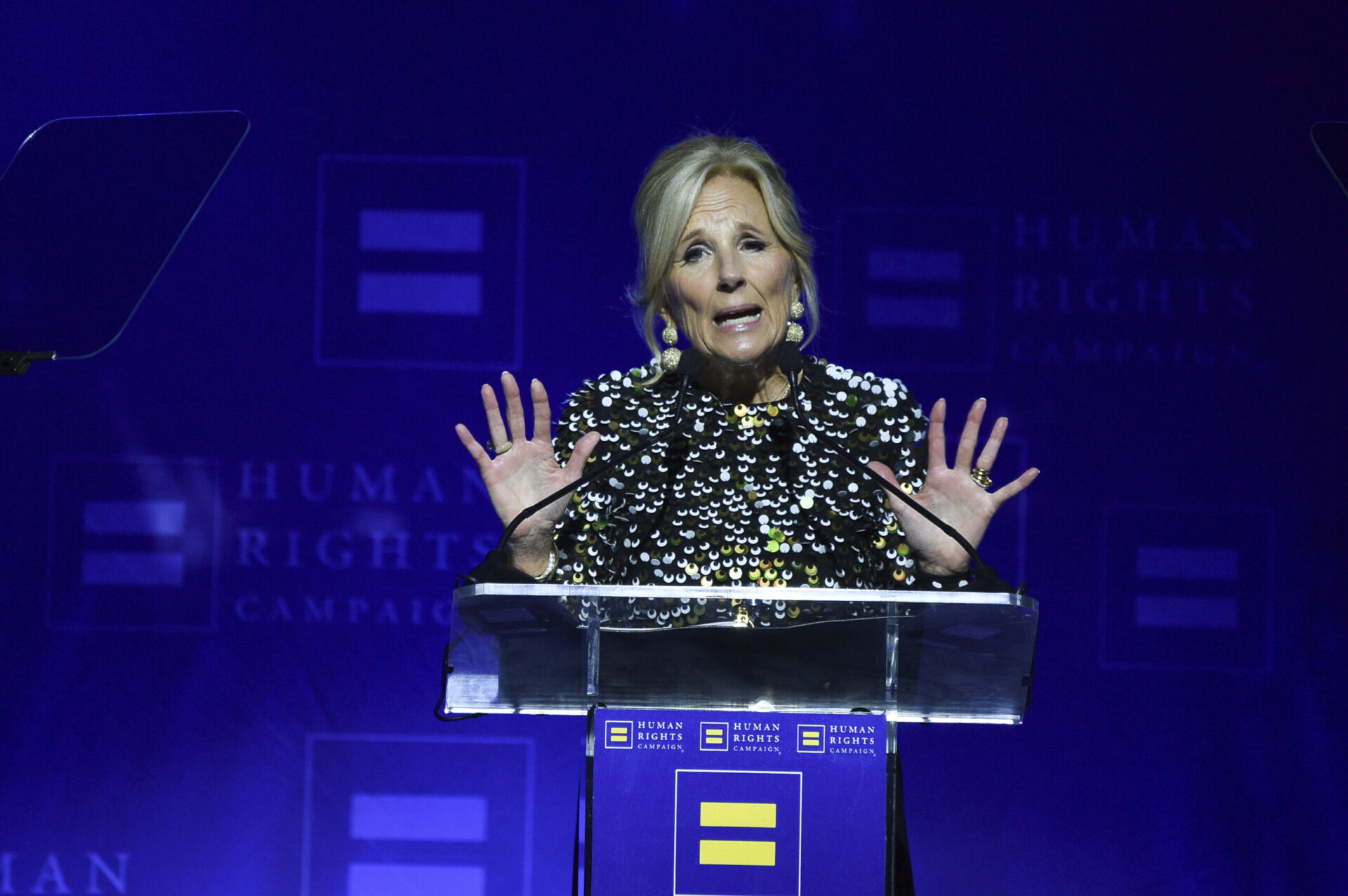

It’s evident that First Lady Jill Biden’s recent comments, where she outrageously likened parental concerns over sexually explicit content in schools to the brutal censorship of Nazi Germany, have only served to stoke the flames of an already heated debate. This grossly inappropriate comparison has rightfully drawn the ire of conservatives who see it as a flagrant and insensitive distortion of both historical facts and legitimate parental rights.
The ongoing discourse regarding what educational materials should be available to our children in schools has been hijacked by such reckless rhetoric. It is not only historically misguided but also belittles the valid worries many parents harbor about what is suitable for their young ones’ consumption.
To invoke Nazism, a regime synonymous with unspeakable atrocities and genocide, as a parallel to those questioning the prudence of exposing school-aged children to sexually explicit material is nothing short of a monstrous misrepresentation. Such analogies are an insult to those who endured the true horrors of Hitler’s totalitarian rule.
Jill Biden’s remarks come at a time when states like Florida are taking commendable steps with legislation like the Parental Rights in Education bill—unfairly labeled as the “Don’t Say Gay” bill by its detractors—to ensure that parents remain informed and involved in their children’s education. These measures are essential for safeguarding our children against content that may not align with family values or could be deemed too mature for their developing minds.
Contrary to what some critics might suggest, this isn’t about banning books or curtailing free speech; it’s about making sure educational content reflects community standards and parental expectations. The backlash from conservative circles underscores a commitment to upholding traditional family values and protecting our youth from premature exposure to potentially harmful material.
Moreover, equating modern policy discussions with Nazi-era censorship trivializes the profound suffering under Hitler’s regime. The Nazis’ book burnings were heinous acts intended to obliterate all opposition and enforce ideological conformity—not remotely akin to parents’ justified concerns over their children’s exposure to explicit subject matter.
The complexity of determining appropriate educational material cannot be overstated—it encompasses freedom of expression, child development, community norms, and delineating responsibilities between parents and educators. While robust debate is necessary, resorting to historical tragedies as rhetorical devices only serves to inflame tensions rather than foster productive dialogue.
As America grapples with these issues, it is clear that simplistic solutions are elusive. The struggle between preserving childhood innocence and advocating for unrestricted access to information mirrors deeper societal rifts over cultural norms and values.
Jill Biden’s inflammatory comments have undeniably added tension to an already contentious conversation on education and censorship. However, they also highlight the importance of engaging in measured discussions on sensitive matters without descending into hyperbolic comparisons that do little more than incite further division.
In moving forward, it is imperative for all parties involved to conduct conversations grounded in mutual respect for differing opinions rather than exacerbating discord through contentious analogies.Use Promo Code GMF At Checkout
Source: Finish The Race