
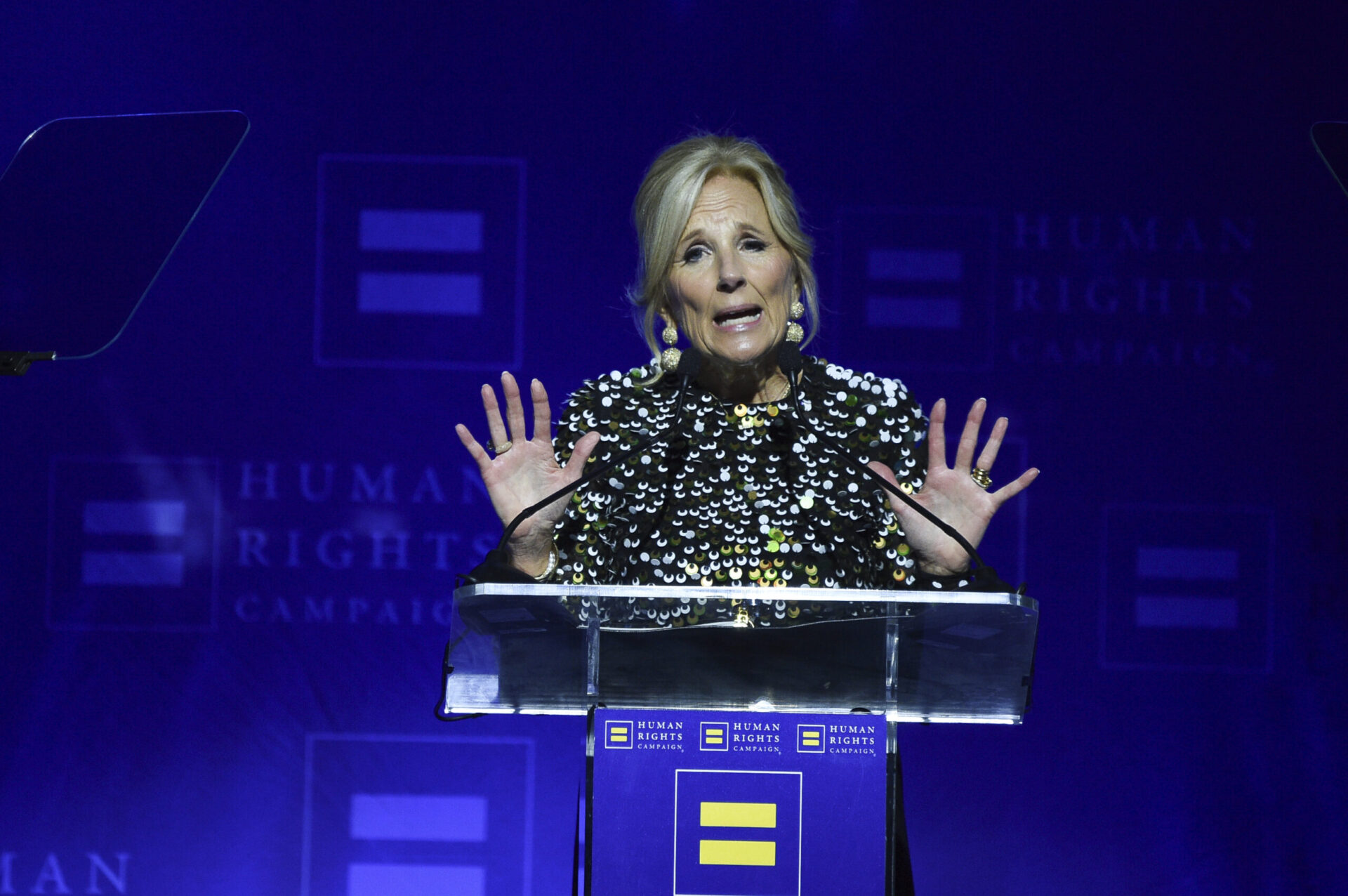

First Lady Jill Biden has recently ignited outrage among conservatives with her inappropriate comparison of opposition to sexually explicit books in schools to the oppressive censorship of Nazi Germany. This gross mischaracterization has further fueled the ongoing debate on what educational materials should be accessible for children within the school system.
Many critics argue that Biden’s analogy is not only historically inaccurate, but it also dismisses the valid concerns many parents have about age-appropriate content for their children. The use of Nazism, a regime responsible for one of history’s most horrific genocides, to describe those who question sexually explicit material in schools is seen as an extreme misrepresentation.
The First Lady made these contentious remarks during heated discussions around education and parental involvement. In states like Florida, legislation such as the Parental Rights in Education bill—referred to derogatorily by opponents as the “Don’t Say Gay” bill—has been at the forefront of national attention.
Supporters argue that such measures are crucial to ensure that parents have a say in their children’s education and are informed about potentially sensitive content being taught or made available. However, Biden’s comparison has faced strong backlash from conservative circles who believe in upholding traditional family values and protecting children from exposure to inappropriate or explicit material at an early age.
The concern isn’t about banning books or stifling free speech—as some critics might suggest—but rather about ensuring that educational content aligns with community standards and parental expectations.
Furthermore, conservatives point out that comparing modern-day policy debates to Nazi censorship trivializes the true horror experienced under Hitler’s regime.
During Nazi rule, book burnings were symbolic acts aimed at eradicating dissenting ideas and cultural artifacts that did not conform to Aryan ideology. To equate parental concerns over explicit content with such totalitarian actions is considered by many as an affront to those who suffered under Nazi oppression.
The debate over what constitutes appropriate educational material is complex and multifaceted. It involves questions about freedom of expression, child development, community standards, and the role of parents versus educators in shaping young minds.
While there is room for robust discussion on these topics, invoking historical tragedies as rhetorical devices can be seen as counterproductive and inflammatory.
As this conversation continues across America’s political landscape, it becomes clear that there is no easy solution. The tension between protecting childhood innocence and promoting open access to information reflects deeper societal divisions over cultural norms and values.
Biden’s comments have only added fuel to an already heated debate on education and censorship. This underscores the need for careful discourse on sensitive issues without resorting to hyperbolic comparisons.
As society grapples with these challenges, it becomes increasingly important for all sides to engage in thoughtful dialogue grounded in respect for differing viewpoints rather than escalating rhetoric through controversial analogies.
Source: Finish The Race