
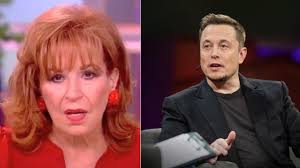

Joy Behar’s recent remarks on The View have raised serious concerns about the spread of misinformation in our media. During the show, Behar made accusations about Elon Musk that many believe are grossly inaccurate. In one instance, she stated, “The guy was not born in this country, who was born under apartheid in South Africa, so has that mentality going on. He was pro-apartheid, as I understand it.” This assertion links Musk to a hateful historical system without any factual basis, stirring further controversy amid today’s already charged political climate.
Almost immediately after her explosive comments, Behar tried to backtrack. She admitted, “I don’t really know for sure if he was.” Then she added, “He grew up at that time when apartheid was in full bloom, before the great Nelson Mandela fixed that.” These contradictory statements only add to the confusion and suggest that her original claim was made without proper research. This kind of reckless accusation is troubling because it not only affects the reputation of a well-known entrepreneur but also undermines the trust that viewers place in established media outlets.
It is important to note that Elon Musk was actually born in Pretoria, South Africa, in 1971, during a time when apartheid was in place. However, there is no evidence that Musk ever supported that racist policy. Musk has spent much of his life advocating for new technology and progress over prejudice, making his efforts to help improve society well-known. After becoming a naturalized U.S. citizen in 2002, his contributions to science, space exploration, and entrepreneurship have helped drive American innovation forward. His achievements stand as a strong rebuttal to the unfounded claims made against him.
This incident on The View has not only drawn fire from supporters of Musk but has ignited outrage on social media. Viewers and commentators have criticized Behar by calling out what many see as xenophobia and hypocrisy. One user commented, “The libs are anti-immigration now,” highlighting an irony that many believe exposes a double standard in current media narratives. The selective promotion of inclusivity while engaging in unfounded accusations undermines not only an individual’s reputation but also the broader integrity of public discussion.
What makes the situation even more concerning is its broader impact on trust in journalism. When media figures make sweeping, unverified claims, it detracts from responsible reporting and damages the public’s ability to rely on the news for accurate information. In our current era, where information spreads quickly across platforms, it is crucial that those in the public eye show more care in verifying their claims. A flawed narrative can sway public opinion, weaken the standards of journalism, and even shape legal discussions inappropriately.
Legal questions have also surfaced in connection with these remarks. Behar’s offhand remark, “So, don’t be suing me, okay, Elon?” suggests that there may be potential repercussions under defamation laws. In the United States, defamation is taken seriously since freedom of speech does not cover statements that unfairly damage someone’s reputation. This example serves as a reminder that even prominent media figures must be held accountable when their words may lead to harm.
Readers, your thoughts matter. Please share your opinions and experiences in the comment section below.