
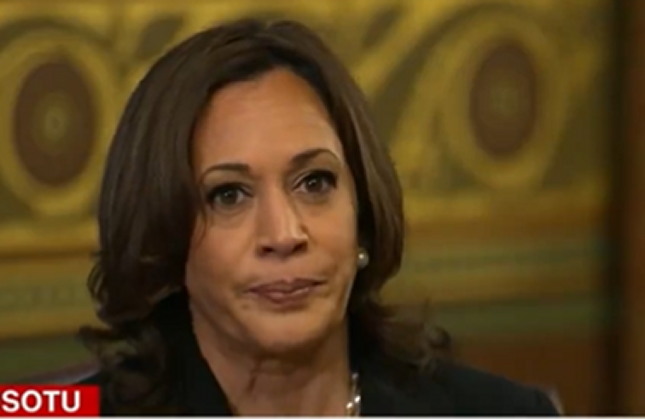

The campaign for Vice President Kamala Harris might be facing challenges that the mainstream media isn’t fully acknowledging. Recent developments indicate that she and Minnesota Governor Tim Walz are losing substantial support from crucial voting groups that have historically leaned toward the Democratic Party. A significant warning sign has emerged: union members, who typically form a strong base for Democrats, are showing less enthusiasm for Harris. This trend is just the tip of the iceberg as broader economic struggles affect Americans across various demographics.
Currently, many Americans are feeling the weight of economic hardships, which poses a significant challenge for Democratic candidates like Harris. According to a report from Just the News, Vice President Harris is experiencing a decline in backing from essential voter blocs within the Democratic coalition. Polling data suggests that former President Donald Trump is making strides in appealing to minority voters, traditionally a stronghold for Democrats. Throughout his political journey, Trump has actively sought to connect with Hispanic and Black voters, and recent polls indicate he may be gaining traction among these groups ahead of the upcoming elections.
In an NBC News/Telemundo survey released recently, it was revealed that Harris holds 54% support among registered Latino voters, while Trump has garnered 40%. This marks an eight-point increase for Trump compared to his performance in 2020 within this demographic. The margin of error for this poll stands at 3.1%, meaning Trump’s actual support could range between 36.9% and 43.1%. This shift suggests that Harris’s connection with Latino voters may not be as solid as previously thought.
Moreover, Trump appears to be making inroads with Jewish voters, even in states that typically lean heavily Democratic. This change can largely be attributed to the ongoing Israel-Hamas conflict and rising pro-Palestinian demonstrations on college campuses, which have forced Democratic leaders to confront the internal divisions within their party. As these events unfold, they highlight a growing discontent among certain voter groups regarding how Democrats address complex international issues.
Harris’s difficulties extend beyond just Latino and Jewish voters; she is also struggling to maintain support from Black voters and younger generations—groups that have historically been reliable for Democrats during elections. A striking example of this disconnect can be seen in a recent clip featuring port strikers in New Jersey when asked about their support for Kamala Harris. Their responses reveal a lack of genuine enthusiasm for her candidacy, suggesting that many feel disconnected from her message and leadership.
It’s clear that voters are increasingly skeptical about Harris’s authenticity. Many are questioning whether she truly represents their interests or if her campaign is merely a facade. The perception of insincerity can be toxic for any political candidate, particularly one who relies on grassroots support from diverse communities.
As these dynamics unfold, it raises important questions about the future of the Democratic coalition and whether it can hold together under mounting pressure from shifting voter sentiments. The upcoming election will undoubtedly serve as a litmus test for how well Harris and her allies can navigate these turbulent waters and regain trust among disillusioned constituents.
What do you think about Kamala Harris’s current standing with key voter groups? Share your thoughts in the comment section below!