
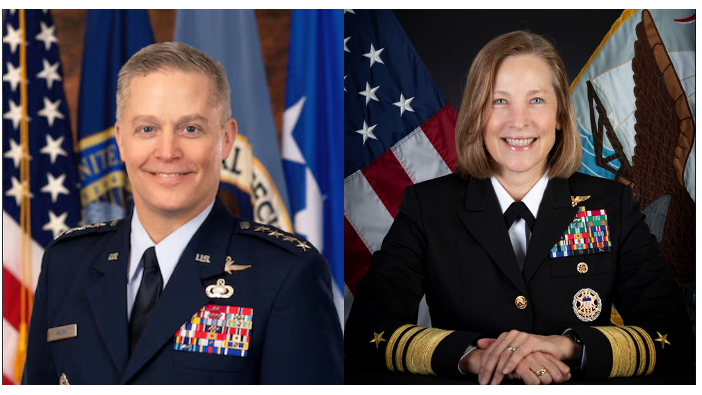

At 1:35pm ET on April 9, 2025, a major shake-up in U.S. Military leadership has stirred debate. Both General Haugh and Vice Admiral Chatfield are still listed on the NSA and U.S. Navy websites in positions from which they are reportedly being removed. This signal change follows months of growing dissatisfaction with how high-level military decisions are made.
General Haugh’s removal from his role as Director of the National Security Agency and Cyber Command came after a meeting between President Trump and Laura Loomer. Loomer claimed credit in her “X” post, stating, “As a Biden appointee, General Haugh had no place serving in the Trump admin given the fact that he was HAND PICKED by General Milley, who was accused of committing treason by President Trump. Why would we want an NSA Director who was referred to Biden after being hand selected by Milley, who told China he would side with them over Trump!?!?”
This dramatic leadership decision is seen in the context of what some are calling sub-standard performance. Under General Haugh’s oversight, the United States has faced what many experts consider the greatest cyber assault in history, codenamed “Salt Typhoon.” Cyber intrusions from China have overwhelmed American systems—from job offer scams to unpaid toll notices. The severity of Salt Typhoon was also underscored in an article title in “Foreign Policy”: “Salt Typhoon Stirs Panic in Washington.” Meanwhile, major government agencies including the FBI, DHS, NSA, and Cyber Command have been unable to root out these breaches effectively. FBI Director Wray warned in January 2024 to the House Select Committee on the Chinese Communist Party that Chinese hackers are positioning themselves to cause serious harm.
Vice Admiral Chatfield, the top U.S. military leader at NATO aside from General Christopher Cavoli, is also under scrutiny. Reports reveal that Chatfield may be making controversial moves at NATO headquarters. According to Jack Posobiec, “Per report, Navy Vice Admiral Shoshana Chatfield refused to put up POTUS & SECDEF pictures in NATO HQ. Also held an ‘all hands’ where she said, ‘we will wait them out 4 years’.” Some see her actions as a public display of resistance to the administration’s expectations, with many questioning her commitment to the chain of command.
Compounding these issues is a crisis in South Korea, where the U.S. Forces Korea Commander, General Xavier Brunson, now faces scrutiny amid political instability. Retired U.S. Air Force Intelligence Officer Dr. Tara O noted that “the acting (U.S.) ambassador (to South Korea), Joseph Yun, has been interacting with the opposition Democratic Party, or Minju, that rammed Mr. Yoon’s impeachment through the assembly.” These developments present serious questions about national security and leadership performance.
We invite you to share your thoughts in the comment section below.