
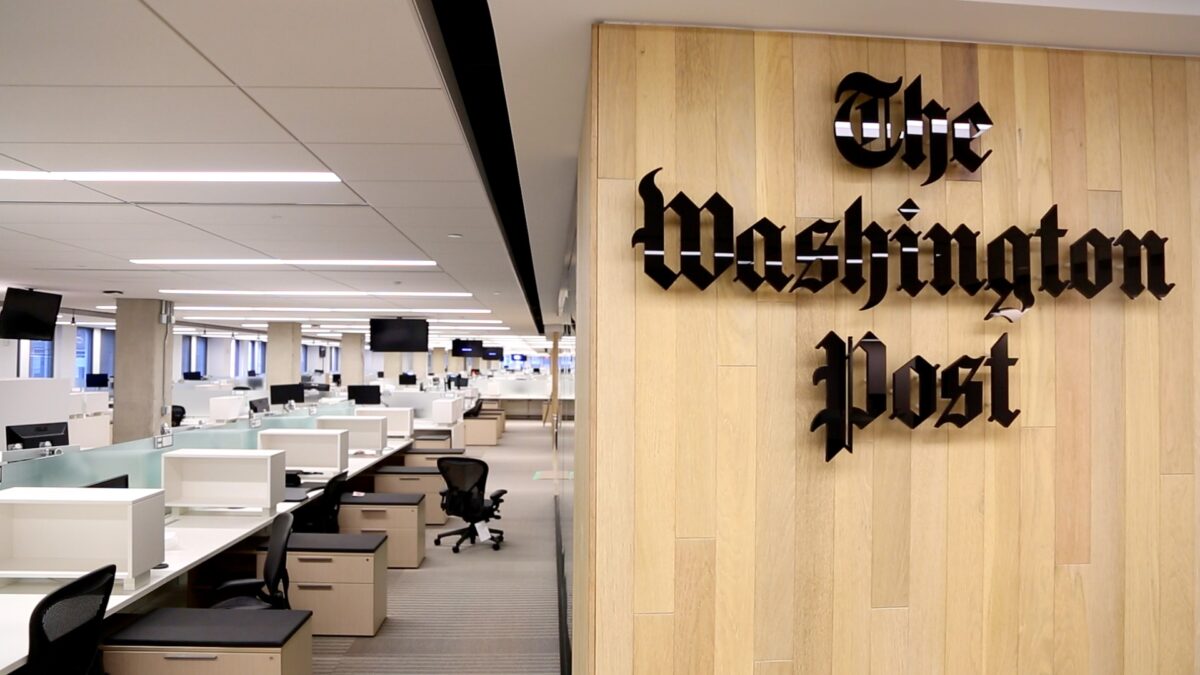

The Washington Post, a once respected newspaper, is now in turmoil due to sinking readership and financial losses. The sudden exit of executive editor Sally Buzbee and the unveiling of a restructuring plan are desperate attempts to salvage the declining subscribers and readership. This is yet another example of the mainstream media’s struggle to maintain relevance in an era where their bias is increasingly called out.
Post publisher Will Lewis and Matt Murray, former Wall Street Journal editor temporarily replacing Buzbee, have rolled out a new strategy. It involves splitting the newsroom into three divisions: one for core news reporting, another for opinion pieces, and a third aimed at luring new readers with modern techniques such as social media, video, artificial intelligence, and sales.
Buzbee reportedly disagreed with this desperate strategy and chose to walk away rather than lead one of these divisions. Lewis, who has only been with the Post for five months, highlighted the dire situation by saying he was interested in growth rather than managing decline. His blunt message to staffers was that people are not reading their content and decisive action was needed.
The Post’s struggles are evident as its website’s unique visitors plummeted from 101 million per month in 2020 to just 50 million by the end of 2023. The Post also reported a loss of $77 million last year. Despite being owned by billionaire Jeff Bezos, it seems even his deep pockets can’t save this sinking ship.
The newly formed “third newsroom” aims at attracting new consumers but how it will function remains unclear. Historically integrating digital and social media operations into the regular newsroom has been the norm for the Post; however this new division suggests a shift back to a more segmented approach, which seems like a step backward.
Critics fear this division might fragment the Post’s news reporting and hinder the collaboration needed for effective multiplatform journalism. Jeff Jarvis, author of “The Gutenberg Parenthesis: The Age of Print and its Lessons for the Age of the Internet,” pointed out this risk.
Concerns about leadership diversity were also raised, especially after Buzbee’s departure, as she was the first woman to hold the editor-in-chief position at the Post. Lewis assured staff of his commitment to diversity but considering two British-born editors are soon set to lead this American newspaper, it raises questions about his sincerity.
Murray will temporarily lead until the November presidential election, after which Robert Winnett, an associate of Lewis and longtime editor at England’s Telegraph, will take over core reporting functions.
Lewis has suggested experimenting with different pay tiers for digital subscriptions in an attempt to appeal to readers interested in specific topics rather than consuming all news. This strategy mirrors that taken by Politico. During her tenure, Buzbee had already begun enhancing coverage in niche areas such as cooking and climate change in order to attract specific reader segments.
This upheaval underscores the broader challenges major newspapers face today as they struggle to balance attracting a national and international audience against declining local news coverage. As The Washington Post embarks on this ambitious restructuring plan, we’ll be watching closely how these changes impact its readership and financial health in the coming months.
Source: Red Right Daily