
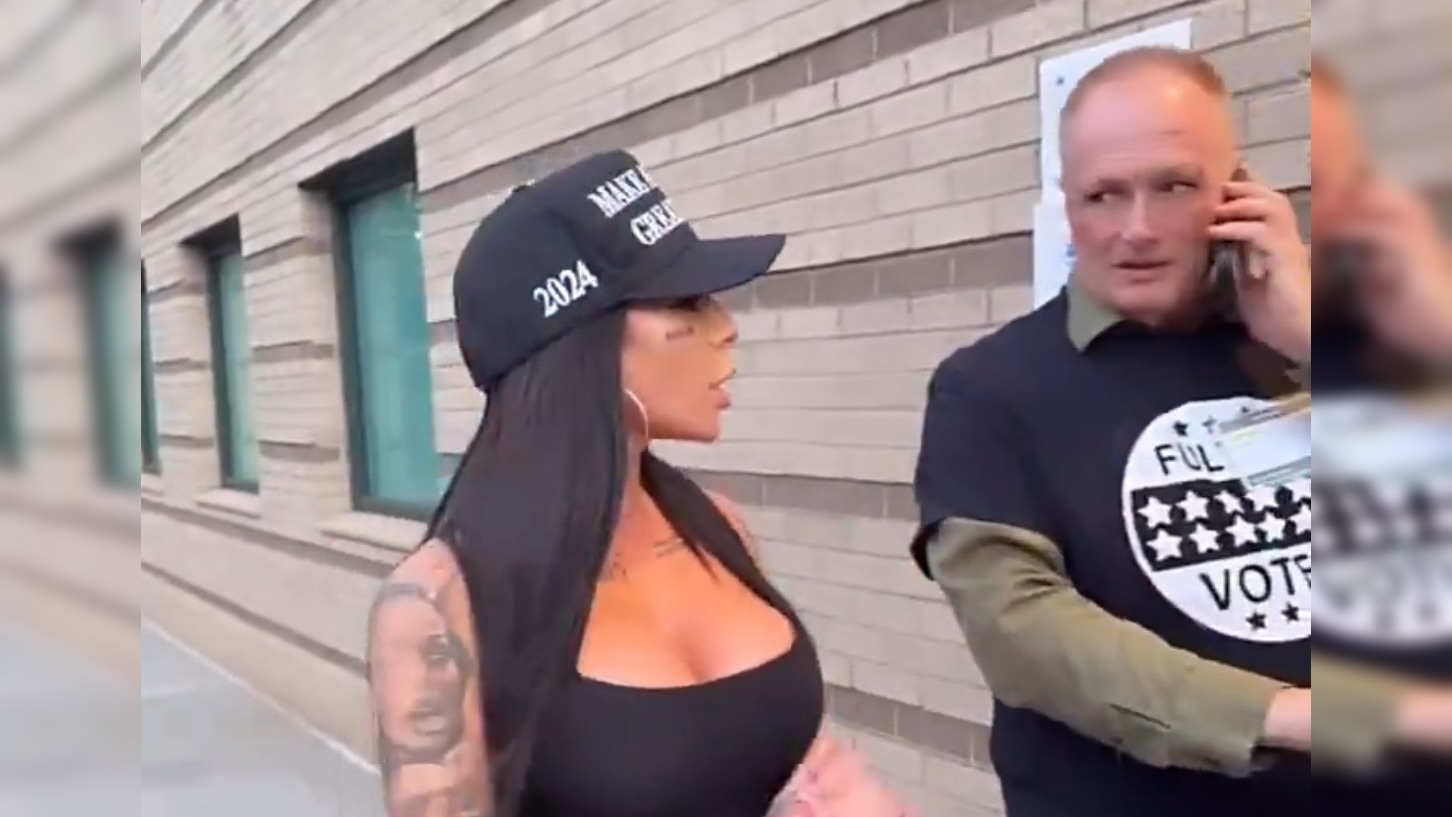

Rapper Forgiatto Blow recently stirred up a conversation about voting rights and political expression in a video he shared on X. In this clip, he and model Claudia Rose encountered a poll watcher in Fulton County, Georgia, who informed them that displaying tattoos related to Trump or his slogans could prevent them from voting. The exchange raised eyebrows and sparked discussions about the boundaries of political expression at polling places.
In the video, Forgiatto Blow asked the poll watcher if he could vote with his Trump tattoo visible. He showed off a striking portrait of Trump inked on his leg. The poll watcher responded firmly, stating that if the tattoo wasn’t covered, it would bar him from casting his ballot. Claudia Rose then jumped into the conversation with a provocative question: “If I get a MAGA tattoo on my face right now, am I allowed to vote?” The answer was clear—she would need to find a way to cover it up before entering the polling place. Undeterred, Rose went ahead and got a MAGA tattoo on her face and later returned to vote.
This incident highlights an interesting aspect of voting regulations across the United States. Many polling locations have strict rules against wearing campaign-related apparel such as buttons or hats that promote candidates or their slogans. According to information from AJC, voters are prohibited from wearing anything that endorses candidates on the ballot when they enter polling places. This is backed by Georgia law which states that no one can electioneer or solicit votes within these spaces.
While it’s clear you can’t wear something like a MAGA hat inside the polling station, there’s an intriguing distinction when it comes to other forms of expression. For instance, you might be able to sport a Black Lives Matter T-shirt since it doesn’t directly promote any candidate or specific legislation. However, if someone were wearing a shirt claiming “Black Lives Matter endorses Candidate X,” that could cross into electioneering territory according to Emory University political science professor Andra Gillespie.
The situation with tattoos adds another layer of complexity because many states don’t have explicit laws addressing them in relation to voting rights. This leaves room for interpretation and inconsistency across different jurisdictions regarding what constitutes acceptable political expression at polling places.
As this debate unfolds, questions arise about where we draw the line between personal expression and adherence to electoral regulations. Should voters be allowed to showcase their beliefs through tattoos? Or does doing so create potential distractions or biases during elections? These are important discussions as we navigate our democratic processes.
What do you think about this situation? Can expressing political views through tattoos while voting be considered acceptable? Share your thoughts in the comment section below!
WATCH:
For those interested in more details surrounding voting regulations and expressions of political support at polling stations, keep an eye out for updates as these conversations continue in communities across America.