
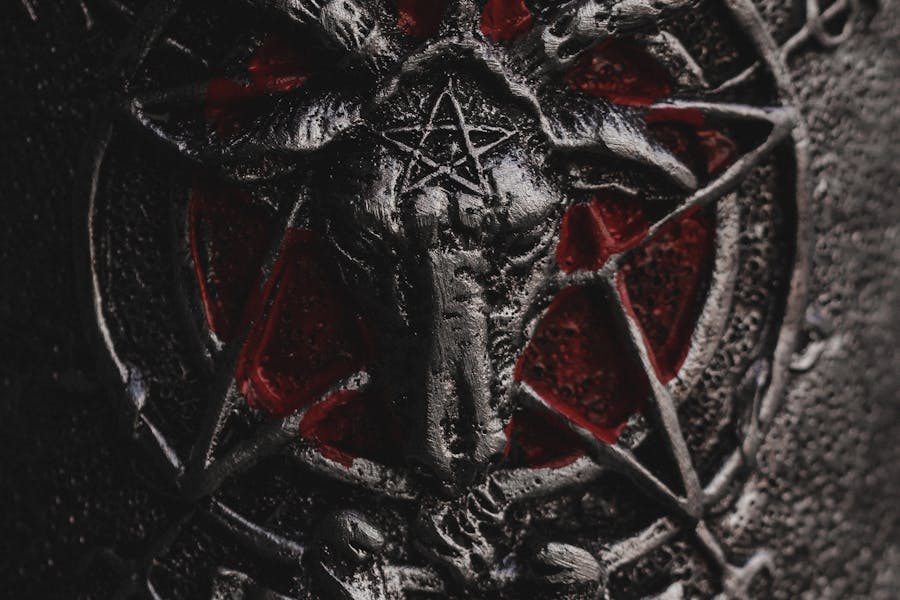

The Satanic Temple has declared that they will introduce their own ministers into Oklahoma public schools if the proposed “Chaplain Bill” is passed into law.
This contentious legislation, Senate Bill 36, would permit religious leaders to visit schools and engage with students on topics of morality and spirituality.
Supporters of the bill view it as a means to provide guidance and support to students, however, The Satanic Temple’s response is perceived by many as an attack on traditional values.
The Satanic Temple, notorious for its confrontational stance on the separation of church and state, has explicitly stated their intention to seek equal access to public schools in Oklahoma if SB 36 is approved.
They base their argument on First Amendment rights that safeguard religious freedom for all, not just mainstream or majority religions.
This has ignited a heated debate about the role of religion in public education and whether such legislation paves the way for all religious viewpoints, even those traditionally seen as contrary to American values.
The advocates of SB 36 argue that it would be beneficial for students by providing them with additional resources for character development and moral guidance. However, critics express concern about the potential implications of allowing various religious representatives access to young impressionable minds within a public school setting. The announcement from The Satanic Temple serves as a stark reminder of these worries.
The organization’s spokesperson, Lucien Greaves, said: “If you have a place in your schools for religious opinion leaders, we’ll be there.” This statement highlights their commitment to challenging what they perceive as preferential treatment given to certain religious viewpoints over others.
The possible presence of Satanic ministers in schools is particularly alarming for conservative parents who fear that their children could be exposed to teachings that are directly opposed to their own beliefs. It raises questions about parental rights in guiding their children’s moral education and whether public institutions should be involved in such deeply personal matters.
Oklahoma State Senator Rob Standridge, who introduced SB 36, likely did not foresee this kind of reaction when he drafted the bill aimed at allowing youth pastors access to help troubled youth. His intention was rooted in providing support systems within educational environments where students often face challenges like peer pressure and bullying.
Regardless of how well-intentioned the bill may be from Standridge’s perspective or those who share his views on faith-based support systems in schools, The Satanic Temple’s response underscores a complex issue: once you open school doors wider for one religion’s influence, constitutionally speaking, you must do so for all religions – even those many find disturbing or offensive.
This situation brings into sharp focus the ongoing tension between upholding constitutional freedoms while also preserving cultural norms that have long been associated with conservative American life. It touches upon deep-seated fears about societal decay and moral relativism – fears that are amplified when institutions meant to nurture young Americans seem threatened by ideologies at odds with traditional family values.
The debate surrounding SB 36 is emblematic of broader cultural clashes over religion’s place in public life. For conservatives who view America as being founded on Judeo-Christian principles, any move towards what they perceive as secularism or non-traditional spiritual practices can feel like an erosion of foundational truths upon which they believe the nation was built.
As this story unfolds in Oklahoma, it serves as yet another battleground where ideological differences over religion and education are being fought fiercely. With each side invoking constitutional rights – freedom of speech and freedom of religion – finding common ground seems increasingly elusive.
While some might argue that exposure to diverse viewpoints is part of a comprehensive education system preparing students for global citizenship; others contend there must be limits set to protect children from influences deemed harmful or antithetical to core American values.
As The Satanic Temple prepares its ministers should SB 36 pass into law – an action which itself is legal under current interpretations of religious freedom – communities across Oklahoma are left wrestling with questions about how far those freedoms extend within public school walls before they begin compromising other values held dear by many Oklahomans.
Source: Finish The Race