
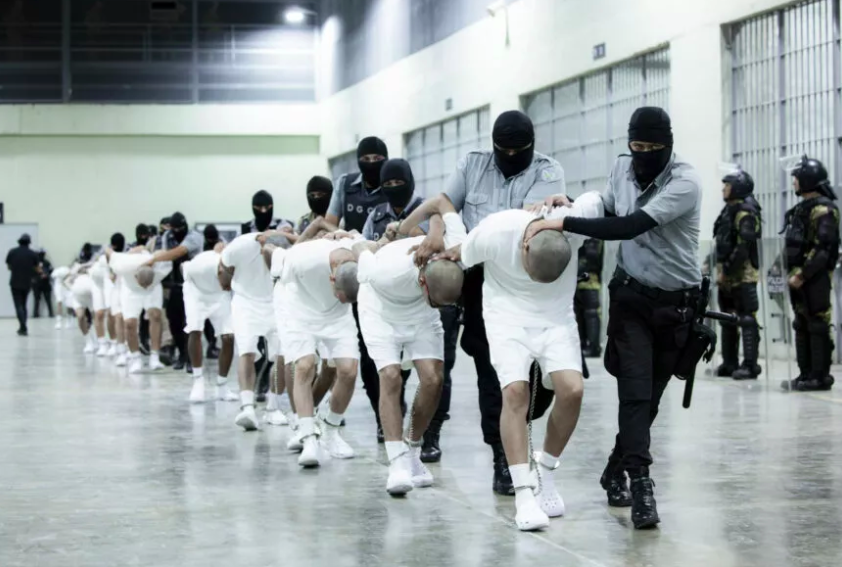

The Trump administration has taken a decisive step to strengthen national security by deporting over 250 alleged gang members to El Salvador. In a move that many conservatives see as a strong stand against violent crime, these actions came even as a federal judge tried to stop the process. Officials believe the operation is crucial to protecting American citizens from dangerous criminal groups.
Most of those deported are connected with the Venezuelan prison gang Tren de Aragua. They were sent to El Salvador’s Terrorism Confinement Center (CECOT), a facility known for its tough security and strict rules. President Nayib Bukele confirmed the arrival of these deportees by stating, “Today, the first 238 members of the Venezuelan criminal organization, Tren de Aragua, arrived in our country.”
The choice of CECOT underlines El Salvador’s serious approach to fighting organized crime.
The operation also saw the deportation of 23 MS-13 members who were wanted by Salvadoran authorities, including some high-ranking figures within the gang. President Bukele emphasized the importance of this move, as one of those deported is among MS-13’s top leaders—a significant step toward breaking up the remnants of the gang. The swift removal of these dangerous criminals has sparked praise among supporters who see the use of existing laws as a proactive way to defend American communities.
Challenges arose in the courts when U.S. District Judge James Boasberg issued an emergency order to halt the deportations and demanded the return of planes already in transit. However, by then, the flights had already landed in El Salvador. Bukele even mocked the decision with a social media post stating, “Oopsie…Too late.” This incident highlights the tension between judicial decisions and executive actions in national security matters.
The legal foundation for this bold move comes from President Trump’s use of the Alien Enemies Act of 1798. This old wartime law allows the president to detain or deport citizens from enemy nations during times of conflict. It is the first time the act has been used since World War II. Supporters argue that this measure reflects a strong commitment to keeping modern American communities safe from foreign criminal organizations.
Secretary of State Marco Rubio was also a major player in reaching an agreement with El Salvador for this operation. He took a moment to thank President Bukele by saying, “Thank you President Bukele for your assistance and friendship.” The decision to house the deportees at CECOT was not without its critics, as some international observers have questioned the conditions within the facility. Although there are concerns about potential overcrowding and the scarcity of basic amenities, others counter that the strict measures are essential to stop the spread of violent criminal activity.
This high-profile move has garnered both approval and criticism. Supporters feel that swift deportations send a clear signal to criminal organizations that America will take necessary actions to uphold law and order. Meanwhile, critics raise issues about the legality and ethics of using the Alien Enemies Act in this modern context, noting the risks of violating due process and human rights. White House Press Secretary Karoline Leavitt defended the operation, insisting that these “heinous monsters were extracted and removed to El Salvador where they will no longer be able to pose any threat to the American People.”
The successful transfer of these gang members, despite judicial setbacks, underscores the complexities of international cooperation in fighting transnational crime. El Salvador’s readiness to accept these deportees is seen as a partnership that crosses borders and prioritizes public safety. As the legal battles over the use of the Alien Enemies Act are expected to continue, the administration’s strong stance speaks to its commitment to protecting the nation. Readers are encouraged to share their thoughts and comment in the comment section below.