
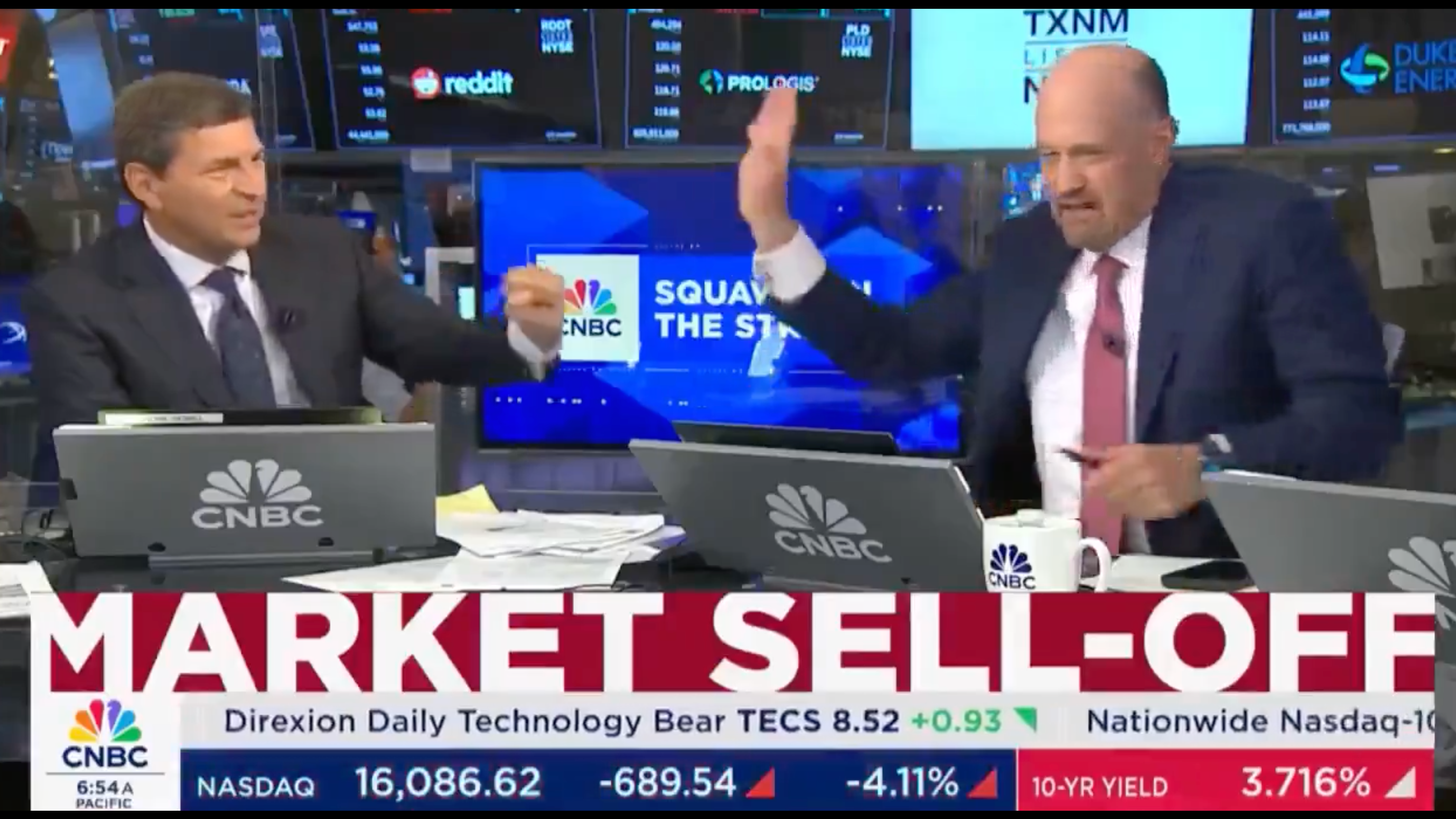

On Monday, the stock market took a significant downturn, a moment that has been referred to as the “Kamala Crash.” During this tumultuous time, Jim Cramer, the host of CNBC’s “Mad Money,” offered some surprising advice for his viewers: support President Trump. Cramer was clear about his stance, stating, “If you’re in the stock market, if you care about your paycheck, you go with Trump. That’s what you do.” His comments came amid growing concerns about economic policies and their impact on everyday Americans.
David H. Faber, another CNBC host, seemed taken aback by Cramer’s assertion and asked, “You do?” Cramer confidently responded that supporting Trump would be beneficial because he intends to cut taxes. This exchange highlighted a divide in perspectives regarding tax policy and its implications for individuals living in different states.
Faber then expressed his frustrations, claiming that his taxes had significantly increased during Trump’s previous administration. He pointed out that living in a blue state has made things particularly challenging for him, saying, “They want to k*ll us… they want to put us out of business.” His remarks reflect a common sentiment among residents of states governed by liberal leaders who have implemented strict economic measures.
This discussion raises an important question: Are blue states struggling due to the policies of their governors? Leaders like California’s Gavin Newsom, Illinois’ JB Pritzker, New Jersey’s Phil Murphy, and New York’s Kathy Hochul have faced criticism for their handling of state economies. Many argue that their decisions have contributed to financial difficulties for businesses and taxpayers alike.
As the debate over tax cuts continues, it’s essential to consider how these policies affect people differently depending on where they live. The conversation between Cramer and Faber serves as a microcosm of the broader national dialogue surrounding economic strategies and their real-world consequences. While some see tax cuts as a pathway to growth and stability, others view them with skepticism based on their personal experiences.
This clash of opinions is not just limited to television discussions; it resonates across social media platforms where individuals express their viewpoints on economic policies. As we navigate these complex issues, it’s crucial to stay informed and engaged in the conversation.
What do you think about the current state of the economy and tax policies? Share your thoughts in the comment section below!