
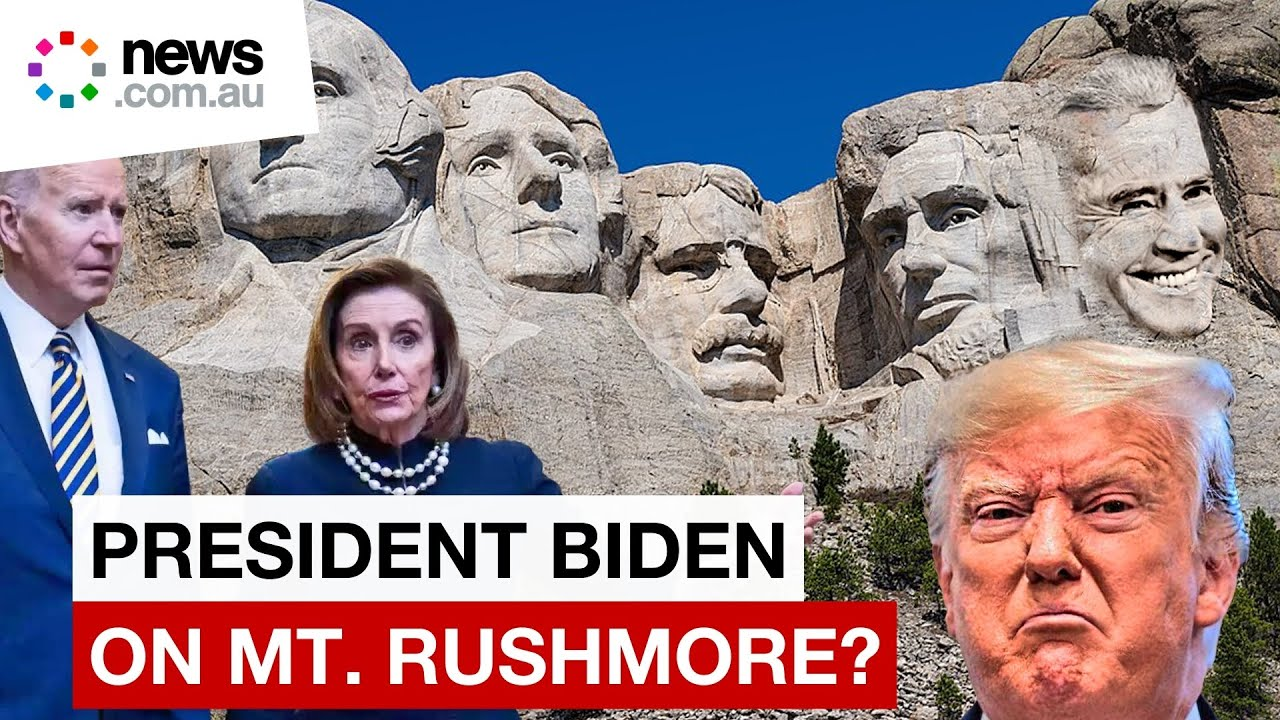

In a recent interview on CBS, former House Speaker Nancy Pelosi made headlines by suggesting that President Joe Biden deserves to be immortalized on Mount Rushmore. This bold statement came during a conversation with CBS host Lesley Stahl, who pressed Pelosi about her influence over Biden’s decisions regarding his political future. When asked what she had told the president to convince him to step aside, Pelosi declined to share any details from their private discussions, stating, “Well, I have never shared any conversations with a President of the United States publicly, so no.”
Stahl followed up by referencing reports that suggested Pelosi was leading a pressure campaign regarding Biden’s presidency. In response, Pelosi firmly denied these claims, asserting, “I wasn’t the leader of any pressure. Let me say things I didn’t do. I didn’t call one person. I did not call one person.” Her insistence on not having contacted anyone personally seemed to underscore her belief in Biden’s ability to make decisions for himself. She expressed confidence in the president’s judgment, saying, “What I’m saying is I had confidence that the president would make the proper choice for our country, whatever that would be.”
Pelosi’s comments took an interesting turn as she praised Biden’s presidency, describing him as “such a consequential President of the United States” and even referred to him as a “Mount Rushmore kind of President.” This remark prompted Stahl to ask if she was implying that Biden should be placed alongside historical figures like Abraham Lincoln on Mount Rushmore. Pelosi responded thoughtfully, acknowledging the presence of Teddy Roosevelt on the monument and suggesting that while he should not be removed, there could indeed be room for Biden.
The discussion highlights not only Pelosi’s admiration for Biden but also raises questions about the future of leadership within the Democratic Party. As politicians navigate their roles and public perceptions shift, conversations like these reflect broader sentiments about legacy and influence in American politics.
This dialogue between two prominent figures in U.S. politics showcases differing perspectives on leadership and legacy. While some may view Pelosi’s comments as an indication of her support for Biden, others might see it as an attempt to shape public perception of his presidency as it continues to evolve.
As this story develops, many are left wondering how these discussions will impact both Biden’s standing within his party and the overall political landscape moving forward. What do you think about Pelosi’s remarks? Should Biden be considered among America’s historical greats? Share your thoughts in the comment section below.