
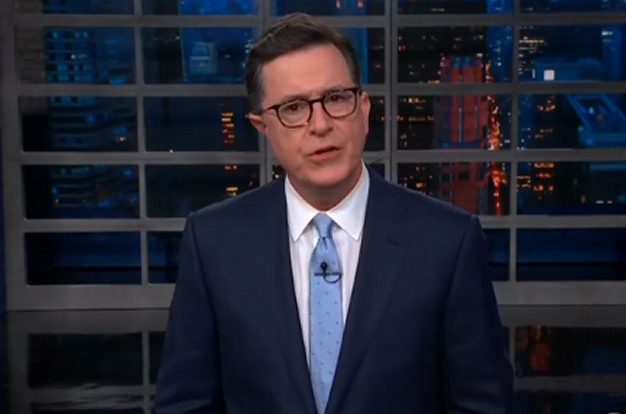

Late-night television has often been a platform for comedians to express their views, but Stephen Colbert stands out as one of the most vocal critics of former President Donald Trump. Recently, on his show “The Late Show,” Colbert shared his thoughts about the end of President Biden’s term in office, framing it as a significant moment. He suggested that this might be the last time viewers see him on air if Trump returns to the presidency. This commentary sparked reactions from both fans and critics alike.
Colbert opened his recent episode by expressing sorrow over what he called the “end of an era.” He joked that he may not be around much longer because Trump could pull him off the air once again. In his mind, Colbert sees himself as a key opponent to Trump; however, many believe that Trump likely doesn’t even consider Colbert important enough to think about him at all. The irony is palpable: while Colbert portrays himself as a central figure in this political drama, it seems he may be projecting more importance onto himself than reality supports.
According to FOX News, during this particular broadcast, Colbert stated, “Yeah, it’s been a good run. It’s been a good run, Joe. Thank you for all your efforts. The next time you all see me, Donald Trump will be president. And you may not see me.” His remarks were laced with sarcasm and self-importance as he reflected on Biden’s presidency coming to an end.
In his opening monologue, he described the occasion as bittersweet and likened it to “a little semi-sweet chocolate chip,” emphasizing how significant this moment was for him personally and professionally. Many viewers found themselves questioning whether such dramatics were warranted or if they merely reflected Colbert’s own anxieties about losing relevance in a changing political landscape.
A clip from the show captured his statement: “The next time you all see me, Donald Trump will be president. And you may not see me.” This tweet quickly circulated online after being shared by Tom Elliott on Twitter—showing how quickly media moments can gain traction in today’s digital age.
However, some commentators argue that if Colbert were to lose his show due to low ratings or viewer disinterest rather than any actions taken by Trump or other political figures, it would reflect more on his content than external factors. Derek Hunter tweeted about this sentiment: “I do sometimes wish Trump were the monster they say he is. The fact that they casually make jokes about it shows they know they’ve been lying the whole time.” This perspective suggests that some individuals feel there is an inconsistency in how late-night hosts portray their narratives versus what audiences perceive.
Colbert has transformed “The Late Show” into a platform heavily focused on his disdain for Trump rather than providing entertainment for all viewers—a shift from its original intent when it first aired. Many are left wondering whether anyone would genuinely miss him if he were no longer part of late-night television’s lineup.
As these discussions unfold online and among audiences across America, it’s clear that opinions vary widely regarding Colbert’s impact and relevance in today’s political climate. What do you think? Share your thoughts in the comment section below!