
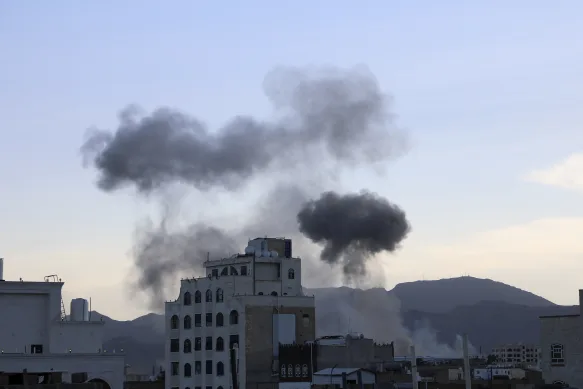

In a strong display of military force, President Donald Trump authorized a series of extensive air and naval strikes against the Iranian-backed Houthi rebels in Yemen. The operation, executed by aircraft from the USS Harry S. Truman carrier strike group in the northern Red Sea, was aimed at neutralizing the rising threat these militants pose to international shipping lanes. This move comes amid growing concerns over the security of one of the world’s most vital maritime corridors.
The targeted strikes focused on key Houthi military infrastructures. These include radar installations, air defense systems, and missile and drone arsenals that have been used in persistent assaults on both commercial and military vessels. By attacking these critical assets, the administration intends to reduce the ability of the rebels to disrupt maritime traffic and endanger lives while also impeding the economic losses caused by their frequent aggressive actions. The operation underscores the need to safeguard global commerce and emphasize the principle of freedom of navigation that is essential for international trade.
President Trump addressed the nation regarding the strikes, stressing the necessity of protecting American interests and the freedom of navigation. He declared, “To all Houthi terrorists, your time is up, and your attacks must stop, starting today. If they don’t, hell will rain down upon you like nothing you have ever seen before.” This message was clear and forceful, leaving no room for misunderstanding about the United States’ resolve in dealing with those who threaten global security.
The conflict in Yemen has been ongoing since 2014, with the Houthis, a Shiite militant group supported by Iran, maintaining control over significant territories, including the capital, Sana’a. This control has allowed them to launch over 100 attacks on vessels since October 2023, further destabilizing the region and affecting global trade. More recently, increased Houthi hostility coincided with heightened regional tensions, particularly after Israel’s blockade of aid to Gaza. In response, the Houthis threatened to target Israeli ships, adding another layer of complexity and risk to an already volatile situation.
Reports indicate that the U.S. operation resulted in significant casualties, including at least 19 deaths, among them 13 civilians in Sana’a. Although the loss of innocent lives is tragic, the precision strikes reflect the administration’s commitment to limiting collateral damage while pursuing important strategic objectives. This effort comes as a stark warning to Iran, which stands as the main backer of these militant factions. President Trump emphasized this confrontation when he stated, “Support for the Houthi terrorists must end immediately. Do not threaten the American people… If you do, beware, because America will hold you fully accountable and, we won’t be nice about it!” His firm words stress that continued support for groups committing these acts of terror will not be tolerated.
The administration’s approach marks a significant departure from previous strategies that were criticized as too lenient in addressing the threat posed by the Houthis. Instead, this military intervention is intended to reassert U.S. dominance in the region and restore stability to the important international shipping routes through the Red Sea. Allied nations have shown support for this assertive action, recognizing that secure maritime channels are essential for global trade networks.
The unfolding situation in Yemen also points to the broader geopolitical struggle between the United States and Iran. Both domestically and internationally, the U.S. decision to strike has been lauded in conservative circles as a necessary step for protecting American interests and ensuring stability in the Middle East. Readers, feel free to share your thoughts and opinions on these developments in the comment section below.